Chemical Identity and Structural Overview
Methyl 2-oxocyclopentane carboxylate (Cas No.10472-24-9) is an organic compound characterized by a cyclopentanone ring bonded to a methyl ester group. Its molecular structure features a five-membered cyclopentanone core with a ketone functional group at position 2 and a carboxylate methyl ester substituent. This unique arrangement provides the compound distinctive physicochemical properties that make it valuable in various chemical syntheses.
Physical and Chemical Properties
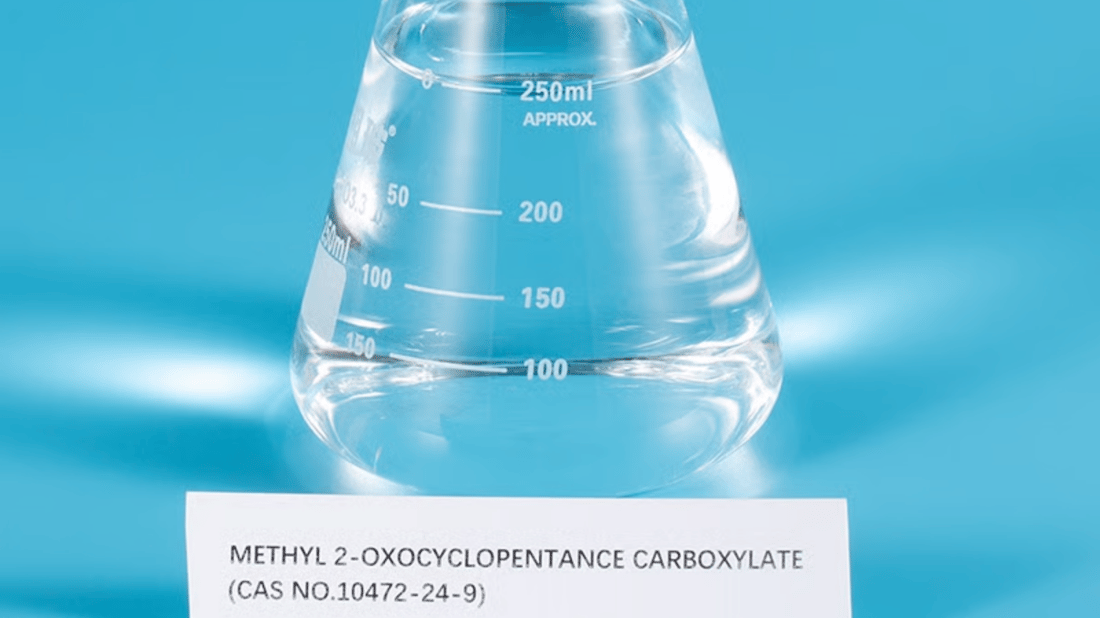
This compound appears as a clear, colorless liquid with a moderate boiling point and a characteristic odor. It exhibits moderate solubility in organic solvents such as ethanol, acetone, and dichloromethane, and limited solubility in water. The presence of both ketone and ester functionalities affects its reactivity, enabling nucleophilic addition reactions and ester hydrolysis under appropriate conditions.
Synthesis Methods
Methyl 2-oxocyclopentane carboxylate is commonly synthesized through the esterification of 2-oxocyclopentanecarboxylic acid with methanol under acidic conditions. Alternative synthesis routes include intramolecular cyclization followed by oxidation and esterification steps. Advances in catalytic processes have improved yields and selectivity, facilitating its production for industrial and laboratory purposes.
Role as an Intermediate in Organic Synthesis
It serves as a crucial intermediate in synthesizing various fine chemicals, pharmaceuticals, and agrochemicals. Its reactive ketone and ester groups allow versatile functionalization, enabling construction of more complex cyclic structures or heterocycles. This flexibility makes it an essential building block in medicinal chemistry for producing bioactive molecules.
Pharmaceutical Applications
In drug development, methyl 2-oxocyclopentane carboxylate is instrumental in generating analogs with potential therapeutic benefits. Its structure provides a scaffold for modifying interactions with biological targets, especially enzymes or receptors influenced by cyclopentanone derivatives. Researchers utilize it to design candidates with improved efficacy and metabolic stability.
Use in Flavor and Fragrance Industry
Due to its chemical features, this compound can be a precursor in synthesizing aroma compounds with fruity or sweet profiles. Its conversion through selective reduction or substitution reactions yields molecules employed as flavoring agents or fragrance components. These applications highlight its importance beyond pharmaceutical fields.
Analytical Techniques for Identification and Purity Assessment
Characterizing methyl 2-oxocyclopentane carboxylate involves techniques like Gas Chromatography (GC), Nuclear Magnetic Resonance (NMR) spectroscopy, and Mass Spectrometry (MS). These methods confirm its structure and assess purity levels critical for quality control during manufacturing or experimental use. Accurate identification ensures consistency in downstream applications.
Environmental Impact and Biodegradability
The environmental fate of methyl 2-oxocyclopentane carboxylate is a growing concern given increased industrial utilization. Studies indicate it has moderate biodegradability under aerobic conditions, minimizing long-term environmental persistence. Nonetheless, handling and disposal should adhere to regulations to mitigate potential ecological risks.
Safety Profile and Handling Recommendations
Safety data for methyl 2-oxocyclopentane carboxylate emphasize its irritant properties upon skin or eye contact and potential toxicity if ingested in large amounts. Proper personal protective equipment (PPE) such as gloves and goggles is essential during handling. Storage in a cool, well-ventilated area away from incompatible substances minimizes hazards.
Market Availability and Future Prospects
Availability of methyl 2-oxocyclopentane carboxylate has expanded due to growing demand in synthetic chemistry and allied industries. Emerging research focuses on developing greener synthesis routes and expanding its application scope in novel drug design and material science. The compound’s versatility ensures its relevance in future chemical innovation.
Quote Inquiry
contact us