Chemical Identity and Structural Characteristics of 2-Nitrobenzaldehyde
2-Nitrobenzaldehyde (Cas No: 552-89-6) is an organic compound featuring a benzaldehyde core substituted with a nitro group at the ortho position. This positioning of the nitro group adjacent to the aldehyde function significantly influences the molecule’s physical and chemical properties. The molecular formula, C7H5NO3, reflects the composition of seven carbon atoms, five hydrogen atoms, one nitrogen atom, and three oxygen atoms. Its structure demonstrates resonance stabilization and impacts reactivity patterns, particularly in electrophilic aromatic substitution and nucleophilic addition reactions.
Physical Properties: Appearance, Solubility, and Stability
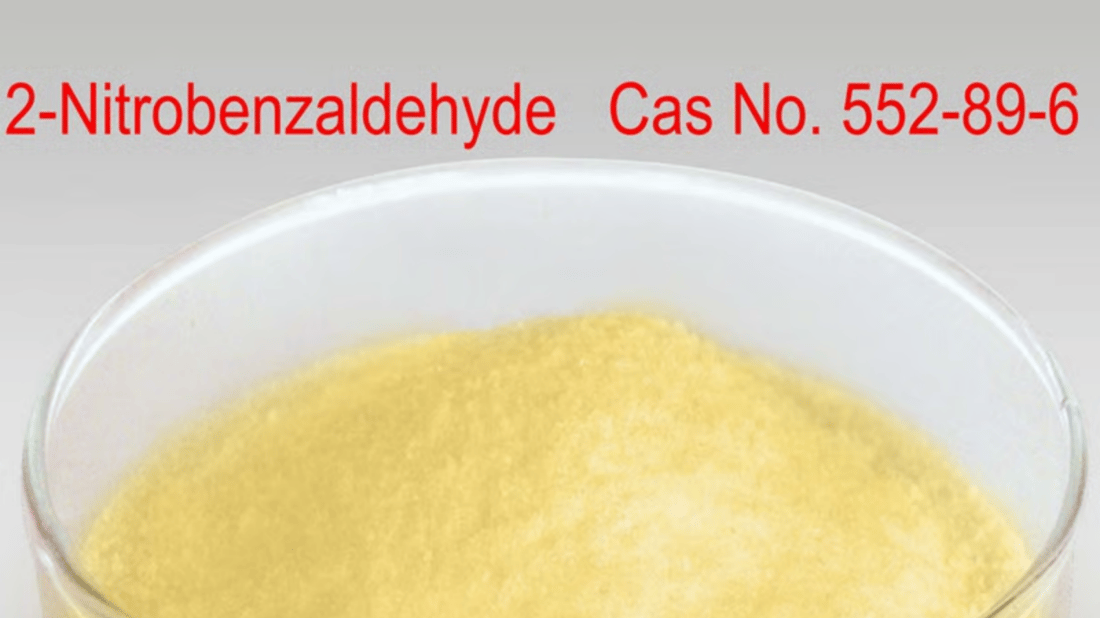
2-Nitrobenzaldehyde typically appears as a pale yellow crystalline solid with a distinctive odor. It has a melting point ranging from approximately 39°C to 41°C and exhibits moderate solubility in organic solvents such as ethanol, ether, and benzene. Due to the presence of both an electron-withdrawing nitro group and an aldehyde moiety, it remains stable under standard ambient storage conditions but should be kept away from strong reducing agents and bases to avoid decomposition. Proper storage in a cool, well-ventilated environment is recommended to maintain purity.
Synthesis Methods of 2-Nitrobenzaldehyde
The synthesis of 2-Nitrobenzaldehyde (Cas No: 552-89-6) typically involves the nitration of benzaldehyde using a nitrating mixture such as concentrated nitric acid and sulfuric acid. The reaction favors substitution at the ortho position due to electronic effects and steric hindrance. Alternative synthetic routes include oxidation of 2-nitrotoluene, followed by controlled oxidation steps to introduce the aldehyde functionality. These methods emphasize reaction conditions that optimize yield and minimize by-product formation.
Applications in Organic Synthesis and Chemical Industries
2-Nitrobenzaldehyde is widely utilized as an intermediate in organic synthesis. Its reactive aldehyde group allows it to undergo condensation, reduction, and substitution reactions that facilitate the preparation of various heterocyclic compounds, dyes, fragrances, and pharmaceuticals. In industrial processes, it serves as a building block for azo dyes and as a precursor for synthesizing nitro-substituted aromatic compounds, which are essential in agrochemicals and advanced material science.
Role in Pharmaceutical Research and Development
In pharmaceutical chemistry, 2-Nitrobenzaldehyde is valuable for synthesizing diverse drug candidates due to its reactive functional groups. It supports the development of anti-inflammatory, antimicrobial, and anticancer agents. By participating in multi-step synthetic pathways, it enables the introduction of nitro and aldehyde moieties which are crucial for biological activity enhancements. Its derivatives have been studied extensively for their potential medicinal properties and as key intermediates in medicinal chemistry.
Environmental Impact and Biodegradability
The environmental considerations surrounding 2-Nitrobenzaldehyde involve its toxicity and degradation behavior. It is moderately toxic to aquatic organisms and should be handled carefully to prevent environmental contamination. Studies indicate that it undergoes slow biodegradation under aerobic conditions, breaking down into less harmful substances over time. Waste disposal methods emphasize containment and neutralization to reduce ecological risks associated with accidental release or industrial waste streams.
Health and Safety: Handling Precautions and Toxicity
Exposure to 2-Nitrobenzaldehyde (Cas No: 552-89-6) may cause irritation to the skin, eyes, and respiratory tract. Handling this chemical requires the use of appropriate personal protective equipment such as gloves, goggles, and lab coats. Inhalation should be avoided, and adequate ventilation must be ensured in work environments. Toxicological data suggest it has moderate toxicity, emphasizing the need for safe storage and spill management to minimize health hazards.
Analytical Techniques for Identification and Purity Assessment
Analytical characterization of 2-Nitrobenzaldehyde is typically accomplished using spectroscopic and chromatographic methods. Techniques such as nuclear magnetic resonance (NMR) spectroscopy reveal structural data, while infrared (IR) spectroscopy confirms functional groups through characteristic absorption bands. High-performance liquid chromatography (HPLC) and gas chromatography-mass spectrometry (GC-MS) are employed to assess purity and detect impurities. These methods ensure quality control in both research and industrial applications.
Industrial Production Scale and Market Availability
As a chemical intermediate, 2-Nitrobenzaldehyde is produced at various scales depending on market demand. Chemical manufacturers supply this compound globally, catering to pharmaceutical, dye, and specialty chemical industries. Availability is supported by standardized production protocols and quality assurance, with CAS registry number 552-89-6 facilitating global regulatory compliance. Pricing reflects purity grades and batch sizes, influencing industrial procurement strategies.
Future Trends and Research Directions
Ongoing research on 2-Nitrobenzaldehyde (Cas No: 552-89-6) explores its novel applications in material science, such as organic semiconductors and photoresponsive compounds. Advances in synthetic techniques aim to improve selectivity and sustainability by reducing hazardous reagents and enhancing green chemistry approaches. Additionally, its derivatives continue to be investigated for expanded pharmaceutical applications, emphasizing the compound’s relevance in future innovation and development within chemical sciences.
Quote Inquiry
contact us